Choosing the China Best CNC Milling Machine Parts Manufacturer requires more than comparing prices. It demands evidence, process knowledge, and practical judgment. CNC milling parts may look identical on a drawing, yet differ greatly in accuracy, surface finish, and service life. A reliable manufacturer controls each stage, from material inspection to final dimensional testing.
Dr. Joseph M. Juran, a respected manufacturing-quality authority, said, “Quality does not happen by accident; it must be planned.” This principle remains valuable for Cnc Milling Machine Parts production. Strong suppliers use calibrated coordinate measuring machines, documented inspection plans, and trained machinists. They also understand tool wear, cutting speed, fixture stability, and tolerance control. Ask for material certificates. Review sample inspection reports. Examine finished edges and drilled holes closely.
Experience still matters.
A capable factory should explain its choices clearly. For example, aluminum parts may need sharp tooling and careful chip evacuation. Stainless steel requires stable fixturing and controlled heat. Tight tolerances may also increase cost and production time. The cheapest quote may not be the best value.
No supplier is perfect. That admission matters. Even experienced manufacturers can face tool breakage, drawing confusion, or inconsistent batches. The real question is how they respond. Do they investigate the root cause? Do they communicate honestly? Do they improve the process afterward?
This guide compares China-based manufacturers through practical criteria, including machining capability, quality systems, customization support, lead time, and after-sales reliability. Some evaluations remain subjective. However, clear evidence can reduce uncertainty and support a more confident purchasing decision.
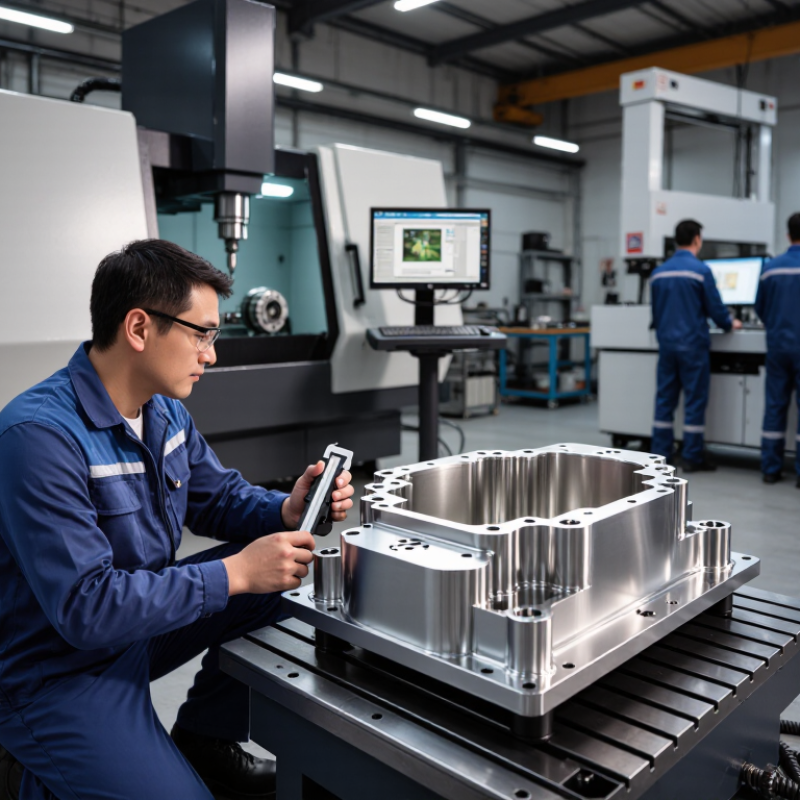
Choosing the best China CNC milling machine parts manufacturer starts with measurable controls, not attractive promises. ISO 9001 is a useful baseline. The ISO Survey 2022 recorded more than 1.2 million ISO 9001 certificates worldwide, showing its broad industrial acceptance. However, certification alone does not prove machining accuracy. It confirms that a quality system exists.
For ±0.01 mm parts, ask for recent inspection records, not only a tolerance statement. A capable workshop should use calibrated CMM equipment, controlled temperature, and documented first-article inspection. Tool wear, thermal expansion, and operator setup can still shift results. Small details matter. In practical production, repeated measurements are more convincing than one perfect sample. The National Institute of Standards and Technology highlights traceability and measurement uncertainty as essential parts of reliable manufacturing data.
Axis capability also changes the evaluation. Three-axis machining suits many prismatic components, while four- and five-axis systems reduce setups and improve access to angled surfaces. The 2023 World Manufacturing Forum report identifies digitalized, flexible production as a major manufacturing direction. Yet more axes do not automatically mean better parts. Programming skill, fixturing, post-processing, and verification remain decisive. A supplier should explain its process clearly, provide material certificates, and report nonconformities honestly. That last point is easy to overlook. Perfect records may deserve more questions, not fewer.
It suggests disciplined planning and stable production control. Ask how delivery is calculated. Partial shipments may distort the figure. Include inspection delays and approved design changes. One impressive month proves little.
Compare promised dates with actual shipment records. Review at least three months of data. Check seasonal demand, tooling wear, and operator changes. Ask for explanations behind missed dates. Records matter more than promises.
It generally suggests a capable process against agreed specifications. For example, review a 25.00 mm bore or 0.02 mm flatness tolerance. Request recent capability studies for critical dimensions. Check sample size and measurement methods. A chart alone is not enough.
Review measurement equipment, calibration status, and revision history. Ask why results changed between production periods. Check whether the data covers real production conditions. Operator changes can affect results. I would still recheck key dimensions.
Yes, a trial can reveal practical problems before regular orders. Compare promised dates with actual shipments. Review corrective actions and root-cause evidence. Request follow-up measurements after corrections. Small trials help.
Match the minimum order quantity to your real demand. A smaller MOQ reduces inventory risk during prototyping. A larger MOQ may reduce unit pricing later. Ask about setup, tooling, and inspection charges. Low prices can become expensive.
Request milestones for material purchasing, first article inspection, production, and shipping. Ask about machine capacity and backup plans. Written schedules are safer than casual promises. Your design changes may also create delays. That part is easy to forget.
No. Check certificate scope, issue date, and factory details. Request material reports and dimensional inspection records. Confirm process controls match the supplied parts. A clean inspection room helps, but calibrated gauges matter more. Documents can still hide gaps.
Use the same drawing, tolerances, quantity, and packaging requirements. Include freight, duties, payment terms, inspection, rework, and communication time. Also review packaging photos. Damaged parts can erase good machining results. I may still miss a hidden fee.
Choosing the best Cnc Milling Machine Parts manufacturer in China requires more than comparing prices. A reliable supplier should demonstrate ISO 9001 certification, consistent ±0.01 mm accuracy, and the ability to produce complex components using 3- to 5-axis machining. Buyers should also evaluate material options, dimensional tolerances, and surface finishes to ensure the parts meet specific application requirements. Performance indicators such as 95% or higher on-time delivery and a Cpk of at least 1.33 can provide valuable evidence of production stability.
A strong quality system should include CMM inspection, documented process controls, and complete material and production traceability. When selecting a supplier, consider MOQ flexibility, lead time, relevant certifications, communication, and total cost rather than unit price alone. The best partnership balances engineering capability, dependable quality, transparent documentation, and responsive service, helping manufacturers reduce production risks while achieving consistent, application-ready CNC milled components.

 Creatingtec