How to Choose a CNC Machining Titanium Supplier?

Time:2026-09-09 Author:Sienna
0%

Choosing a supplier for Cnc Machining Titanium requires more than comparing hourly rates. Titanium rewards precision, but it exposes weak processes quickly. A capable supplier should understand grade selection, cutting temperatures, tool wear, chip control, and stress management. Ask how the team machines Ti-6Al-4V, commercially pure titanium, or other requested grades. Their answer should include practical details, not vague promises. Look for controlled speeds and feeds, sharp tooling, stable fixtures, and suitable coolant methods. Small details matter.

Review the supplier’s experience with similar parts. Can they provide inspection reports, material certificates, and lot traceability? Do they measure critical features with calibrated equipment? Evidence matters more than polished photographs. Certifications such as ISO 9001 or AS9100 may support confidence, but certificates alone do not guarantee good work. Check their scope, current status, and relevance to your project. Request samples or a documented first-article process when possible. A reliable partner should explain how they handle dimensional variation, surface finish, burrs, and difficult internal features.

No supplier is perfect. That is worth remembering. Even experienced machinists can encounter distortion, tool breakage, or unexpected material behavior. The stronger supplier reports these risks early and proposes practical corrections. Consider communication, lead-time honesty, engineering support, and packaging quality. A low quote can become expensive after rework, delays, or rejected parts. Choose the supplier that demonstrates repeatable control, transparent records, and sound technical judgment. Your decision should rest on verified capability, not confident language alone.
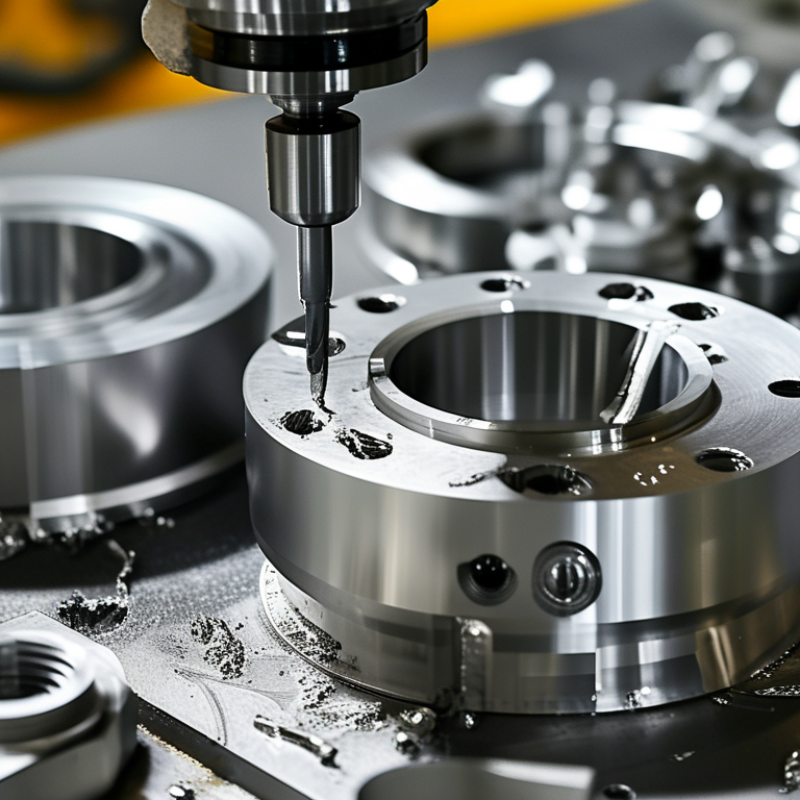
How to Choose a CNC Machining Titanium Supplier?

Define Your Titanium Machining Requirements

How to Choose a CNC Machining Titanium Supplier?

Define Your Titanium Machining Requirements

Begin with the material, not the supplier’s sales promise. State the titanium grade, temper, stock form, and required material certification. Titanium grades behave differently during cutting, even when their names appear similar. Small details matter. A drawing should specify critical dimensions, geometric tolerances, surface roughness, and inspection points. Avoid writing “high precision” without numbers. It creates confusion and weakens supplier comparisons.

The U.S. Geological Survey’s Mineral Commodity Summaries 2024 reported global titanium mineral concentrate production at roughly 10 million metric tons in 2023. This figure describes raw mineral supply, not finished machining capacity. It still shows why traceability matters. Ask whether the supplier can provide heat numbers, test certificates, and documented material storage. For aerospace or medical work, reference the applicable specification, such as ASTM B348 for titanium bars and billets. Do not guess.

Your requirements should also cover part volume, prototype quantity, delivery frequency, and packaging. Include thin walls, deep pockets, threaded holes, and difficult-to-reach surfaces. These features affect tool access, heat control, and scrap risk. A practical supplier should explain its inspection method, equipment limits, and experience with your alloy. Request a sample inspection report before production. It may reveal missing tolerances or unrealistic assumptions.

I would also question my own drawing. Is every tolerance truly necessary? Excessive precision can increase machining time without improving performance. A clear requirement saves money, reduces rework, and gives the supplier a fair technical test.

How to Choose a CNC Machining Titanium Supplier?

Define Your Titanium Machining Requirements

Material grade directly affects cutting parameters, tool selection, workholding, and inspection requirements. Before selecting a CNC machining supplier, confirm the required titanium grade and mechanical performance. The values shown are commonly specified minimum room-temperature properties in MPa; exact requirements depend on the applicable material standard, product form, and heat treatment.

Evaluate Supplier Expertise and Technical Capabilities

Choosing a CNC machining titanium supplier requires more than comparing hourly rates. Evaluate how deeply the team understands titanium’s behavior during cutting, drilling, and finishing.

Ask which titanium grades they machine regularly. Grade 2 and Grade 5 require different cutting strategies, tooling choices, and heat controls. Experienced engineers should explain spindle speeds, chip evacuation, coolant delivery, and tool wear without vague promises. They should also review your drawings and identify thin walls, deep pockets, sharp corners, or difficult tolerances before production begins.

Request evidence from similar projects. Photos are useful, but process records are stronger. Check whether the supplier uses five-axis machining, stable workholding, and dedicated tools for titanium. Their inspection system should include calibrated CMM equipment, surface-finish checks, and material traceability. Test reports should match the lot, grade, and required mechanical properties.

Communication reveals technical maturity. Can the supplier answer a tolerance question clearly? Can they suggest a safer design without changing its function? A capable team will discuss risks, not hide them. Small details matter. Titanium can gall, overheat, or distort when controls are weak. Even skilled machinists sometimes underestimate a new geometry. That is why prototype feedback and documented process adjustments deserve attention before full production. A supplier’s willingness to admit uncertainty may be more reliable than polished sales language.

Verify Materials, Equipment, and Quality Control

How to Choose a CNC Machining Titanium Supplier?

Verify materials, equipment, and quality control before discussing price. The U.S. Geological Survey’s Mineral Commodity Summaries 2024 estimated global titanium sponge production at about 270,000 metric tons in 2023. This supply chain is specialized. Ask for mill certificates, heat numbers, and chemical composition records. Confirm the alloy grade, condition, and applicable ASTM specification. A reliable supplier should trace each billet from receiving inspection to final shipment. Missing records are a serious warning.

Equipment matters because titanium generates heat and resists cutting. Ask whether the shop uses rigid five-axis machines, controlled coolant delivery, and titanium-specific cutting parameters. Check spindle stability, tool-life monitoring, and workholding methods. Request sample inspection reports showing dimensional results, surface finish, and burr control. ISO 9001:2015 emphasizes documented processes and risk-based thinking, but certification alone does not prove machining skill. I have seen impressive certificates hide weak process evidence. Your review must go deeper.

Tips: Visit the facility if possible. Watch material identification, chip handling, and inspection practice. Ask for calibration records for CMMs, micrometers, and temperature-controlled gauges. Require first-article inspection for complex parts. Review nonconformance records, not only successful samples. Keep the questions practical. A supplier that explains one past mistake clearly may be more trustworthy than one claiming perfection. Sampling plans should match part risk, production volume, and critical dimensions. Never accept “within tolerance” without actual measurement data.

Compare Pricing, Lead Times, and Production Capacity

How to Choose a CNC Machining Titanium Supplier?

Price alone can hide important production risks. Ask for a detailed quote covering material, programming, tooling, inspection, and surface treatment. Titanium prices vary by grade, stock form, and certification requirements. A supplier should explain these differences clearly. Compare the same drawing revision and tolerance range. Otherwise, the cheapest offer may not be comparable.

Lead time needs more than a promised shipping date. Request a schedule covering material purchasing, first article inspection, machining, and final inspection. Ask whether critical machines are available during your production window. A reliable supplier identifies bottlenecks before accepting the order. Attractive schedules can fail when titanium stock arrives late. That possibility deserves an honest discussion.

Tips: Request two sample timelines. One should cover normal production, and another should address urgent demand. Check monthly titanium capacity, machine size, shift patterns, and current workload. Ask how the supplier controls tool wear, heat, and dimensional drift. Review inspection records, calibration dates, and nonconformance procedures. Capacity is not simply machine quantity. Skilled operators and dependable inspection matter too. A small trial batch can expose communication gaps early. It may slow purchasing slightly, but it can prevent costly rework later.

Assess Certifications, Communication, and Long-Term Support

How to Choose a CNC Machining Titanium Supplier?

Assess Certifications, Communication, and Long-Term Support

A reliable titanium supplier should provide current, verifiable certifications. Check the certificate number, issuing body, expiry date, and covered production site. ISO 9001 shows controlled quality processes, but it does not guarantee perfect parts. For medical or aerospace work, confirm whether additional standards match your application. Ask for material certificates, heat numbers, inspection records, and calibration evidence. Traceability matters when a small batch contains expensive titanium stock.

Look beyond polished documents. Request a sample inspection report with dimensions, tolerances, surface finish, and measurement equipment. A capable engineer should explain tool selection, heat control, chip evacuation, and distortion risks. Their answers should be specific, not copied from a sales script. Communication can fail quietly. A supplier may accept unclear drawings instead of asking useful questions. That is a warning sign.

Long-term support requires more than fast quotations. Discuss revision control, production capacity, delivery planning, nonconformance handling, and engineering changes. Ask how they protect your process when a key machine or operator becomes unavailable. Clear escalation contacts help when a thread is damaged or a tolerance drifts. Small details matter. Review response times during sampling, not only after signing a contract. A supplier can perform well on one prototype and struggle during repeat production. That possibility deserves an honest conversation.

How to Choose a CNC Machining Titanium Supplier? — Assess Certifications, Communication, and Long-Term Support
Evaluation Category Assessment Dimension Practical Evidence to Request Strong Supplier Indicator Weight Example Score
(1–5)
Certifications Quality management system Current ISO 9001 certificate, certification scope, issuing body, and expiration date. The certificate scope covers CNC machining, inspection, and the facility producing the parts. 15% 5
Certifications Industry-specific quality controls AS9100 for aerospace work or ISO 13485 for applicable medical-device manufacturing. Relevant certification is supported by documented process controls, internal audits, and corrective-action records. 8% 4
Technical Capability Titanium grade and material knowledge Experience with commonly machined grades such as Grade 2, Grade 5, and Grade 23; review material specifications and restrictions. The supplier explains cutting strategy, heat control, tool wear, burr prevention, and grade-specific machining risks. 12% 5
Technical Capability Inspection and measurement capability Equipment list, calibration records, inspection plan, CMM availability, and sample inspection report. Measurements are traceable to calibrated equipment and the inspection method matches the drawing tolerances. 12% 5
Traceability Raw-material and batch traceability Mill test certificate or certificate of conformity, heat or lot number, material grade, and linkage to the finished part. Material identity remains traceable from receiving inspection through production, final inspection, and shipment. 10% 4
Communication Quotation clarity and engineering response Review the quotation for assumptions, tolerances, surface finish, tooling, inspection, packaging, and exclusions. Questions are answered with specific technical information rather than unsupported price or delivery promises. 8% 4
Communication Production-status visibility Agreed communication schedule, named contact, escalation route, and change-notification procedure. Delays, nonconformities, and design-for-manufacturing concerns are reported before they affect delivery. 8% 4
Delivery Lead-time reliability Review documented performance for prototype, first-article, and repeat-production orders. Quoted lead times include material procurement, programming, inspection, finishing, and shipping rather than machining time alone. 10% 4
Long-Term Support Corrective action and nonconformance handling Sample corrective-action report showing root-cause analysis, containment, corrective action, and effectiveness verification. The supplier uses a documented process and provides replacement, rework, or disposition decisions with clear timelines. 7% 4
Long-Term Support Repeatability and continuous improvement Revision-control process, first-article records, process-change notifications, and repeat-order inspection data. Approved drawings, programs, tooling information, and inspection records are controlled to prevent unauthorized changes. 5% 4
Commercial Risk Capacity, continuity, and backup planning Production capacity, critical-equipment availability, subcontracting disclosure, and business-continuity plan. The supplier can explain how it manages machine downtime, material shortages, labor constraints, and approved backup processes. 5% 3
Weighted Supplier Assessment Result 100% 4.2 / 5
Scoring guide: 1 = insufficient evidence, 2 = major gaps, 3 = acceptable, 4 = strong, 5 = fully documented and consistently demonstrated. Certification suitability depends on the specific product, process, and customer requirements.

FAQS

: What titanium grades should a supplier regularly machine?

: Ask about common grades, such as Grade 2 and Grade 5. They need different cutting speeds, tools, coolant methods, and heat controls. Vague answers suggest limited experience. Ask for examples from similar parts.

How can I evaluate technical machining expertise?

Review how engineers analyze your drawings before production. They should identify thin walls, deep pockets, sharp corners, and tight tolerances. Ask how they control tool wear, chip removal, and distortion. Specific answers matter more than polished promises.

What equipment is important for titanium machining?

Look for rigid multi-axis machines, stable workholding, and controlled coolant delivery. Titanium generates substantial heat during cutting. The supplier should monitor spindle stability and tool life. Equipment alone is not enough.

How should titanium material be verified?

Request mill certificates, heat numbers, chemical records, and alloy details. Each billet should remain traceable from receiving inspection to shipment. Check that records match the delivered material. Missing documents are a serious warning.

Which quality records should I request?

Ask for dimensional reports, surface-finish results, burr checks, and calibration records. For complex parts, require first-article inspection. Review actual measurements, not only statements saying “within tolerance.” Numbers reveal more.

Do certifications prove machining capability?

No. A certificate shows documented processes, not perfect machining performance. Verify the certificate number, expiry date, covered facility, and applicable scope. Also review sample reports and nonconformance records. Certificates can look impressive while process evidence remains weak.

How can communication reveal supplier reliability?

Ask practical questions about tolerances, damaged threads, heat, and distortion. A capable team explains risks clearly and suggests safer design changes. They should ask questions when drawings are unclear. Silence can become an expensive mistake.

What should I discuss before long-term production?

Discuss revision control, capacity, delivery planning, engineering changes, and nonconformance handling. Ask what happens if a key machine or operator becomes unavailable. Review response times during prototyping, not only after agreement. A successful prototype may not guarantee stable repeat production.

Conclusion

Choosing the right Cnc Machining Titanium supplier begins with clearly defining your project requirements, including the titanium grade, part dimensions, tolerances, surface finish, quantity, and intended application. A suitable supplier should demonstrate strong experience with titanium’s unique machining challenges, such as heat generation, tool wear, and material distortion. Review their technical capabilities, programming expertise, equipment condition, and ability to manage complex geometries or tight specifications.

Material traceability and quality control are equally important. Confirm that the supplier uses verified materials, reliable inspection equipment, and documented testing procedures. When comparing candidates, consider total value rather than price alone, including lead times, production capacity, delivery consistency, and flexibility for future orders. Certifications, responsive communication, engineering support, and transparent problem-solving can also indicate long-term reliability. By evaluating these factors together, you can select a Cnc Machining Titanium partner capable of delivering consistent quality, predictable timelines, and dependable support throughout the life of your project.


Sienna

Sienna

Sienna is a skilled marketing professional with a deep expertise in our company’s core products and services. With a passion for innovation and detail, she plays a pivotal role in crafting insightful blog posts that not only highlight the unique features of our offerings but also provide valuable......